Doomswitch

Let’s kick this off with a bit of a thought exercise…

Imagine for a moment that you judge people solely based on the colour of their skin. Or perhaps you hold prejudices against their sexuality, gender, race, religion, political beliefs, or something else. The specifics don’t really matter just yet because we’ll be cycling through various biases together soon enough. What’s important is that, for the sake of this exercise, you agree to judge others based solely on some arbitrary measure or another. You’re not concerned with their character, actions, or how agreeable they are. It may not even matter how they look once our chosen metric relates to an affiliation or belief. All you care about is this one thing—a single, indiscriminate criterion that dictates whether they’re worthy of your admiration or disdain.

Now, picture every single person on this planet—man, woman, or child—lined up according to how closely they align with your chosen metric. For simplicity, imagine they’re arranged by skin colour, from the fairest of skin tone to the darkest. Regardless of where on this spectrum your admiration lies, you know that somewhere near the opposite end is a group of people you must detest.

Next, imagine you’re tasked with pinpointing the exact spot along the length of this line where your feelings shift—where someone stops being worthy in your eyes and becomes someone of lesser value than the person next to them due to the colour of their skin. You already know that there’s a group you hate because they’re different from you—they’re either too dark or too light. But where exactly does that group begin? Could you confidently single out the person where everyone beyond them is deemed inferior?

How dark is too dark? How light is too light? Are you comfortable selecting a point in the line where you’ve undoubtedly included small children and babies among those you’ve decided to abhor? And what do you do when someone who, based on their ethnicity, should have a darker complexion ends up on the lighter side of the spectrum? Or when someone of Caucasian descent has skin dark enough to place them closer to the darkest end? Does the fact that skin and race are indiscriminate of one another amplify the complexity of the task at hand?

Chances are, this isn’t an easy concept to grasp. It might be straightforward when dealing with extreme differences, or the endpoints of our line. But when those differences are subtle, identifying the point where one person becomes lesser than the next becomes much harder. Someone you might have condemned based on their skin colour if assessed in isolation could end up in the surprisingly large group that you find not different enough from yourself to warrant loathing.

Now, let’s try again, this time arranging people by religious creed. Maybe you’re an atheist, a Muslim, a Christian, a Shinto, or a follower of Sikhism. Regardless of your belief, you’ve decided that anyone who shares or practices your faith is admirable, and anyone who doesn’t is to be despised. What does your line look like now? Does shuffling people based on their beliefs make it easier to identify where your willingness to tolerate different ends?

If you’re a Christian, do you accept followers of Judaism or Islam? After all, all three religions share concepts like sacrifice, justice, peace, the afterlife, and loving God. Is it not splitting hairs to decide that someone’s beliefs or practices are close enough to your own to be accepted, while the person standing next to them —who shares many similar principles, should be reviled? And how do you account for someone who says they believe what you do, but is non-practicing? Are they placed before or after someone who actively engages in worship even if that worship doesn’t look exactly like your own? 

Alright, one last scenario. Let’s narrow down the number of people in our line and see if that makes things easier. Because if you’re anything like me, judging someone based off their skin colour, or beliefs isn’t easy. So this time, we’ll limit the line to people from your own country and arrange them by their political affiliations—from those who most align with your views to those whose stance is the least like your own.

Could you walk along the line and locate that specific point where your agreement or indifference turns to hate? If you’re on the left, do you detest someone on your side of the aisle if they agree with a comment or policy from the right? Or if you’re on the right, can you accept that there are people on the left who appreciate, or even respect, the political leaders of your preferred party? Again, how different is too different? And how much divergence from your own viewpoints are you willing to accept? 

This isn’t easy is it? 

The theoretical exercise you’re being asked to perform is highly problematic. It drastically oversimplifies complex issues like identify and discrimination, whilst simultaneously reinforcing harmful stereotypes. And that’s before you begin to factor in the multifaceted idiosyncrasies that, for better or worse, make each of us unique. Chances are that if you were actually faced with performing this task, you’d wind up confused and frustrated before ultimately throwing your hands in the air at the impossibility of the assignment, or selecting a location within the line at random.

We’re going to put a pin in this exercise and come back to it. But first… Let’s briefly talk about online poker.

Or more specifically, we’re going to talk about doomswitches. A doomswitch is a hypothetical mechanism that online poker players believe a gaming site can toggle to rig a game either for or against a player. When a player claims to have been “doomswitched,” they describe going through a series of seemingly skewed hands where their losses pile up quickly, making it feel as though the site is intentionally working against them.

In reality, players understand that while poker is largely a game of skill and probability, there’s also an element of luck and randomness involved. They know that the concept of a doomswitch is just a joke. Sometimes, no amount of skill can overcome the randomness of being dealt a two and seven off-suit or facing a beginner who defies the 1-in-649,739 odds to hit a royal flush. Yet even though poker players use the term with tongue in cheek, it still lends itself quite nicely to where I was heading with those endless lines of people…

The world feels as though it has become an increasingly chaotic place. People are divided, angry, struggling with rising living costs, caught up in culture wars, real wars, or venting online over some perceived slight. Many feel isolated or alone, and like the hits just keep on coming—almost like someone has flipped a doomswitch in their lives, skewing the hands they’ve been dealt.

But that’s not entirely true…

Yes, inflation is straining many households, and the financial pressure is very real. Similarly, there are very real conflicts resulting in the needless deaths of far too many. But let’s set these ubiquitous facts aside for a moment and talk about some of the other factors driving division. To do that, let’s revisit the idea of our endlessly long lines of people and examine why it’s so hard to quantify hate when we’re all standing shoulder to shoulder. The answer is simple: we’re all connected, and we’re not as different as we are led to believe.

If we go back to our original line arranged by skin tones, the person at the very start and the one at the very end of that line would share a human genome where 99.9% of their genetic material is remarkably similar. Within that remaining 0.1% would be the single nucleotide polymorphisms that would define our race, as well as the bases that makes each person unique.

If we consider our line based on secular beliefs, there really isn’t much difference between an atheist who believes in treating people with respect and a Christian who follows the Golden Rule. Or a Muslim who abides by the principle of “an eye for an eye”. The teachings are the same. They’re just delivered differently. Even in our political line, there’s more common ground than we realise. Even in a country as seemingly divided as the U.S., over 100 policies have majority bipartisan support.

So why do we feel so divided? Why are we so often afraid or angry?

Because fear and division sell. And there are people so desperate for their five minutes of fame that they’ll exploit our minor differences, prying them apart until those insignificant cracks feel like chasms.

These bad actors often speak in absolutes, using polarising language to incite anger or fear. They do this not because they truly believe in what they say, but because they don’t need to. Their goal is to gain trust, not to stand by their words. If they can frustrate and antagonise, they can also mobilise and achieve their own ends; whatever they may ultimately be. But here’s the thing; the only people who speak in absolutes are absolute liars.

Politicians don’t genuinely believe their opposition will cripple a country; they just want to be part of the ruling majority, and are sometimes prepared to make morally ambiguous decisions or proclamations to do so. Many racial or religious bigots don’t hate based on race—how could they? Race is a socially constructed concept that can shift depending on numerous factors. Instead, they harbour hatred for nonsensical reasons, often rooted in something within themselves they refuse to acknowledge.

Writing about bad actors always feels a bit disingenuous. I don’t blog as much as I used to, primarily because I’ve come to realize that the loudest voices are often the least inspired. Creating content that might be shared on platforms where disinformation spreads intentionally—or misinformation inadvertently—feels like I’m no better than the very people this post aims to condemn. But despite the contradiction of me standing on my own soapbox here, there is a point to all of this that makes me feel almost OK about temporarily becoming the kind of person I despise.

We live in a unique time. Thanks to platforms that thrive on cloud capital and likes, our overexposure to content, and our tendency to overinvest in the words and images projected onto screens, people, organizations, and algorithms have become increasingly adept at finding and exploiting the tiny fissures between us. These differences are then widened into gorges that many of us become fearful to cross. The more fearful or hateful we become toward our neighbours, our government, or anyone else, the more likely we are to consume—or even produce—misinformed content that keeps ourselves and others perpetually fixated on our devices.

We’ve become ensnared by emotive language and progressively polarizing ideas pushed by incendiary individuals who just want our attention. They create content to keep us glued to screens, making it feel as though someone has flipped a doomswitch in our lives, convincing us that they alone have the answers to all this manufactured fear and division.

But if that’s true, where do we go from here?

Honestly, wherever you choose. After more than a decade of blogging that has seen me endlessly transitioning from enamoured to disillusioned with sharing thoughts and opinions online, I’ve come to understand that trying to change someone’s mind is like playing chess with pigeons. It doesn’t matter if you win—the pigeon is still going to defecate all over the board and strut around like it won anyway.

There’s no profound insight here. And the words that I write won’t have the slightest impact on those who think differently than I do. Instead, there’s just one man’s realisation that the world of division and hate speech we seem to be hurtling toward doesn’t feel fulfilling, palatable, or even representative of reality.

Despite what many bad actors say, there’s much more to the world than black and white, left or right, or whatever binary they choose. Much like the lines we draw, there’s a middle ground. And once you consider that middle ground, the differences that some people or organizations exploit become much less significant. You begin to realize that, much like a game of online poker, everyone in this world is just trying to play the hand they’ve been dealt. Most of us aren’t inherently evil or wrong; we’re just trying to make the best of the cards we have. Unfortunately, sometimes we’re led astray by a handful of bad actors and fuck-heads who attempt to engage our doomswitches to divide and segregate for their own selfish means.

Kill Your Darlings

It’s been over a year since I’ve blogged. Now here I am sitting at my laptop staring at the title I’ve chosen for this piece, wondering if I still have what it takes to do this. I usually wouldn’t select the title for an entry until I’ve at least finished my first draft. But after spending so long away from this site it seemed only fitting that if I were to post something, that I should break the mould of my own creative process and try something new while doing it. So here we go. Hopefully what comes next isn’t too rusty.

To kill your darlings is a phrase often wrongfully attributed to the American writer William Faulkner, but which can be traced back to Sir Arthur Quiller-Couch. The expression suggests that a writer must attempt to ruthlessly eliminate anything they personally love that does nothing to advance their story. And anything means anything; characters, turns of phrase, and subplots should all be stripped back and cast aside if they don’t contribute towards driving the narrative forward. As a writer who has been through several bouts of manuscript edits, it’s a concept that I have often found myself contemplating as I read through the works of others, whilst also fighting vehemently against when an editor inevitably suggests a heavy-handed revision of my own labours of love. 

When it’s someone else’s prose that needs refinement, it’s easy to see. Ask anyone game enough to ask me for my opinion on a book or article that I’ve read and they’ll tell you that I can be hyper critical. But when it’s my own work, the process of methodically laying to rest the superfluous ideas I have fallen in love with is far more arduous. It isn’t easy to fight against my own ego and see the world from the viewpoint of my reader, rather than the egotistical writer that I am. 

This complexity of shifting perspective and overcoming ego extends far beyond writing too. As a friend, a family member, or just a stranger watching from a distance it’s easy to see the people or afflictions in the lives of those around us that should be delegated to the cutting room floor. Shit, I can’t even begin to fathom the amount of times that I’ve uttered phrases like they’d be better off without him/her, or If I was them I’d leave that job, and countless others; only to fail to recognise that I too am tormented by many of prohibitive factors and traits that I so readily identify in others. Factors and traits which ultimately detract from the narrative of who I am. And who I want to be.

So, for the rest of this post I want to try and separate my amour propre from my work and kill an idea that I wrote about way back on the 26th of January 2014. Because while I was proud of what I wrote at the time, I’d like to believe that I have grown a lot in the eight and a half years since. The blog post that I once considered a darling of this site has been rendered redundant by the experiences that have since moulded and defined me. It no longer serves any purpose in the story of my life. 

The post started like this…

Here’s the thing: Respect isn’t given. It’s earned. It doesn’t grow on a tree and doesn’t come attached to a label or title; it’s received as a reward for your time spent in the trenches of life battling alongside your fellow man.

…It’s cringe worthy, right? I hate so much about that introduction that as I sit here and prepare to chide my younger self, I honestly don’t even know where to begin. There’s a weird line about battling in trenches, references to a label or title (I originally wrote the post because I was pissed off about being overlooked for a promotion at a company I left soon after), and the clichéd it doesn’t grow on a tree analogy that absolutely misses the intended mark. But it’s the idea that that respect is earned rather than given that I want to lay to rest because it irks me that I once wrote about an ideology that I’ve since grown to passionately disagree with. 

Before I go any further, it seems important to note that I’m not perfect. Nor am I going to pretend that I am at any point in this post…

I’m imperfect in so many ways, and while I do try to be respectful towards everyone, the truth is that I’ve been in more fights in the past couple of years than any other period my life. Not because I’m an arsehole; I’m a hell of a lot calmer than I was in my twenties. My sharp increase in physical confrontations has stemmed from a return to competitive sport and my own ruthless desire to win. I always start off a competition being courteous towards my opponents. But those courtesies can be taken away. And when they are, my desire to win can get the better of me and lead to some heated moments. It doesn’t help that I’m a talker. And an opinionated one at that. It’s a trait that can really get under someone’s skin in a competitive environment and I’ve been known to use that knowledge to my full advantage at times.

I’m digressing. But for good reason. It’s so easy to cultivate false perceptions of oneself online; convincing others that we are infallible when the truth is that we are anything but. I’d love to say that I’m always respectful, but I’m not. Sometimes I can be a real dick. We all can. Yet despite our shortcomings and moments of frustration, it’s important to remember that respect should be our default setting towards others. Why? Well, apart from the obvious that if it is something that must be earned we’d all be a bunch of abrasive assholes who never form any meaningful connections because we believe that everyone owes us something, or must validate themselves to us; the simple answer is that feeling respected promotes feelings of psychological safety. 

Respect provides a sense of security to speak up, to share ideas, and feel included. It also reduces someone’s susceptibility towards bullying and hate, which in a society that is increasingly polarised and divided on issues both legitimate and trivial, seems pretty damn important.

So then why do we as a society often assume that respect should be earned? I mean, aside from the fact that so many of those awful motivational social media pages plaster the adage across well-rendered images billionaires, or stacks of cash and bombard our newsfeeds to capture our attention… Sadly, one of the biggest reasons is fear. 

We fear that if we offer respect to everybody, then we risk it being abused by somebody. That by being polite, friendly, and open to establishing lines of effective communication we make ourselves vulnerable to the minority of people who may take advantage of our generosity. But refusing to default to respect because we’re afraid it will be abused is foolish. It creates a world full of the abrasive assholes that I mentioned above. And we all know from our own personal experience that it hurts when someone shows us a lack of respect that we believe to be unwarranted. It makes us feel upset, and closed off; as though our psychological safety has been attacked or called into question.

Perhaps a better way to protect ourselves from the slim percentage of individuals who exploit our respect is to learn how to take it away. Because while I whole heartedly believe in offering a default level of common courtesy to everyone we meet, I recognise the importance of taking it away when it is mistreated.  

Unfortunately for me, a true definition of mistreatment probably doesn’t extend as far as I selfishly assume it does on a basketball court. Someone intentionally committing a dirty foul probably doesn’t justify my reactions or verbal taunting. But it does extend far enough to cover those who purposely or repeatedly, even if unintentionally, cause us harm. Whether that harm be physical, emotional, financial or whatever else is unimportant. What is important is being established enough in our understanding of self to know when we’ve reached our limit in a relationship and when it is time to pull back that default level of respect and walk away.

I’m not sure if I’ve managed to kill the idea that I originally wrote about in 2014 by writing this

I’d like to hope so. But the truth is that I think I’ve just learned to see the world from an alternate perspective. As someone who is learning to approach everyone I meet with a base level of polite thoughtfulness, as well as being someone who has been on the receiving end of the it must be earned ideology, I can honestly say that the former gets you a hell of a lot further in life and relationships than the latter. 

I could have just deleted my original post rather than recanting it like this. Or even just ignored it as though I’d never written it at all. But there’s no growth in erasing the past or pretending it doesn’t exist. Instead, I thought it’d be fun to embrace it. To admit that I was wrong and kill something that I once thought to be a darling before closing out this piece with the kind of analogy that a younger and admittedly less rusty version of me would have taken a lot of pride in constructing. 

At thirty-three years of age I’ve come to realise that forming and maintaining relationships is much like tending to a garden. If each time you encounter someone new you plant a little sapling of appreciation, eventually your garden will grow. Sure, you’ll have some bad weather days where some saplings don’t survive, and inadvertently plant a few weeds that you need to remove from time to time. But for the most part you’ll have a beautiful plot full of vibrant colours and diversity to tend to. But if you hold onto those saplings until the weather is just right and people prove themselves worthy to earn their place in your garden, you might avoid the weeds, but you’re likely to end up with an anaemic looking plot that is mostly soil and devoid of the brilliant vibrancy you truly deserve.

Offer people respect, and they’ll enrich your life (and possibly your garden) in ways that you never thought possible.

Alpha

It goes without saying that the world is in really bad way right now. As I write this, nations all around the globe are struggling to contain a global pandemic that has already claimed over 100,000 lives, infected more than 1.6 million people, and left millions more financially devastated. In addition to this, entire countries are locked down as shelter in place restrictions attempt to slow the spread of a virus that is overwhelming healthcare systems and has already significantly altered the course of human history.

Covid-19 is everywhere. It’s on our televisions and radios; in our newspapers and magazines. It’s on the tips of our tongues when we talk to our friends and family, and in the back of our minds with just about every decision we make.

Right now the world appears to be stuck in this morbid state of doom and gloom. We’re afraid. And we should be. We’re living through a fucking scary time with no clear ending in sight. We don’t know how long shelter in place restrictions will be needed, if our jobs are safe, or even when we’ll be able to see our loved ones again. But we do know that while each of us is trying their best to get through this pandemic, we’re collectively at risk of being overcome by the gravity of our situation if all we do is consume negativity.

So rather than talk directly about how Covid-19 has reshaped our lives, I want to talk about the relationship between the pandemic we’re living through and a long-misconstrued societal belief whose etymology is derived from wolves instead. 

About a year ago, I was visiting my Mum interstate. As we often do when I go home to see her, we were sitting around her kitchen drinking coffee and talking; catching up about all the little things that never seem to come up in conversation when we’re on the phone. I have no idea why, but for some reason our conversation on this particular day turned to the subject of masculinity; and in true Chris Nicholas fashion, my over confidence was on full display. As someone in his thirties who has experienced death, battles with mental health and masochistic behaviour, financial ruin, failed relationships, and family illness, I considered myself to be a man. I have taken a few big hits in life, and although I’ve been knocked down more times than I can count, I have always found a way to stand back up and face whatever life threw at me next.

But as Mum and I waxed philosophical about what it meant to be a man, she told me that she never really considered me to be a stereotypical alpha-male. The comment was supposed to be a compliment; and part of me took it that way. As a society, we often perceive an alpha character as a dominant individual with greater access to power, money, and respect. These people are often abrasive, intimidating, and sit at the top of a social status hierarchy.

When compared to these criteria, I wasn’t, am still am not an alpha-male. I like to keep fit, but am by no means the most powerful person I know. I’m prepared to fight for what I believe in, but I’ll never initiate conflict or be perceived as intimidating. And I have a couple of bucks in my back pocket, but I’m not exactly rolling around in piles of cash making frivolous investments without a care in the world. And yet, despite not meeting any of the criteria that society needed to consider me an alpha, Mum’s well-intentioned comment rankled me. Because if I wasn’t an alpha, then what was I?

So, I started researching what it truly meant to be an alpha.

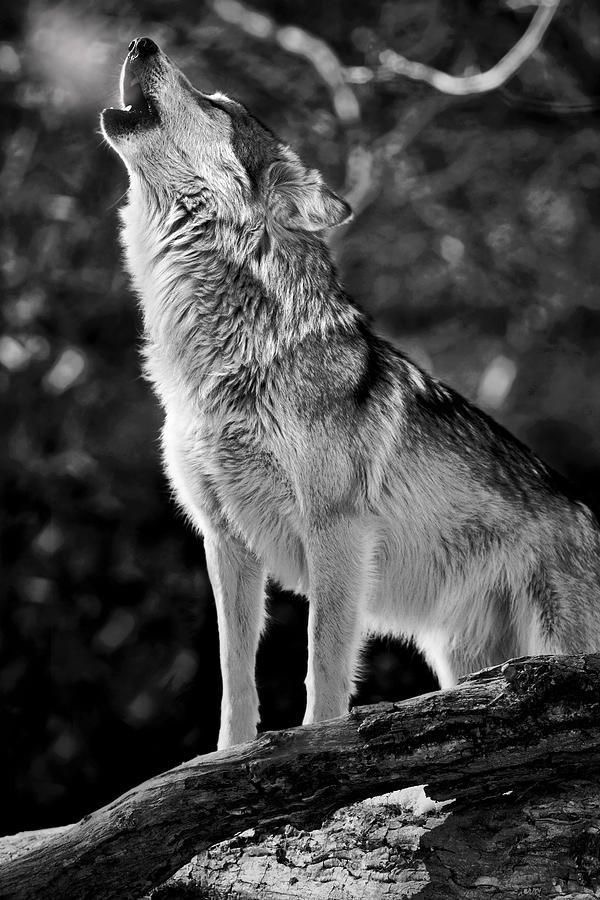
The term alpha as society now knows it was first coined in during the 1940s by Rudolph Schenkel of the University of Basel in Switzerland as he studied a pack of grey wolves held captive in a zoo. During his study Schenkel observed as the wolves competed for status within their own sex, until over time, the pack established a clearly defined alpha pair, documenting his findings and sharing them with the world. Then almost thirty years later, the American scientist L. David Mech penned a book called The Wolf which built upon Schenkel’s findings and helped to popularise the concept of alpha and beta wolves within the pack.

Throughout their respective papers, both researchers noted pack dynamics that used competition to define rank. The duo used the phrase alpha to identify the wolves who used domineering, violence, and aggression to become the clear leader of a pack. The savage imagery that these papers presented was hugely appealing to popular culture, particularly in mediums such as film where an alpha could be defined as a win at all cost protagonist who would burn down an entire village just to serve his own selfish ends.

And so, thanks in part to these two studies (and a myriad of similar research papers), society began to use term alpha wolf as a term of endearment to define those members of our society that climbed the social, financial, or political hierarchy at any cost.  Thanks to stylised film and television, it became cool to be seen as a badass who didn’t give a shit, and who used animalistic dominance to achieve their goals. Because these characteristics were typically given to male roles within movies, the phrase was adapted, and the alpha wolf became the alpha male. He was the asshole you hated for his ruthlessness, but admired for his success.

Alpha Wolf

But it turns out that the studies used to define the hierarchy of man were flawed. The wolves in the two researcher’s studies weren’t in their natural environment while under observation. They were captives forced to coexist in a foreign climate that stunted their natural instinct. And so, operating in a high-stress situation, they turned on each other and used violence to determine their pack structure.

In the late 20th and early 21st century, researchers began to question the findings of Schenkel and Mech, tracking grey wolves in the wild to test their hypotheses. Until this point scientists had believed that independent and unrelated grey wolves formed packs each winter out of necessity. They thought that wolves lived in close proximity, and banded together during winter to increase their chances of survival, using dominance and violence to establish their pack’s structure.

But through this process of tracking the movements of packs, researchers learned that a pack isn’t a group of individuals drawn together by circumstance, it is a nuclear family of wolves that consists of two parents, and their children. The alpha of a pack is not the most violent, or aggressive. The alpha is simply a paternal figure who co-parents his offspring with his mate.

In his natural habitat, the alpha, like so many great father figures in our own species, treats his family with love, generosity and kindness. He’s notorious for playful roughhousing with his pups, and is even known to pay special attention to the upbringing of the runt of a litter. That doesn’t mean that the alpha is all warm and fuzzy though; wolves are still incredibly dangerous apex predators. And the alpha will ferociously protect his pack against a threat when he needs to. But, as renowned wolf researcher Richard McIntyre says:

The main characteristic of an alpha male wolf is a quiet confidence; quiet self-assurance. You know what you need to do; you know what’s best for your pack. You lead by example. You’re very comfortable with that.

Which means that not only did researchers like Schenkel and Mech get it wrong when they assumed that being an alpha meant being domineering (a viewpoint that Mech later  recanted). But it also means that society has it wrong when we assume an alpha to be intimidating or powerful; or even that their purpose in life is to serve themselves. Those are the characteristics of an asshole. An alpha is calm, level headed, knows what is best for their pack, and isn’t afraid to put the need of others above their own. They show sensitivity and love to those they care for, and are willing to do violence only when necessary.

Perhaps if my mum were to compare me against these criteria, rather than the misguided version of an alpha popular culture has led us to believe in, her opinion about whether I am a stereotypical alpha-male might have been different.

You’re probably wondering what any of this has to do Covid-19…

And you’d be right for doing so. The truth is, the concept of being an alpha has as much to do with Covid-19 as you allow it to.

As I said at the top of this post, the world is a very scary place right now. We’re surrounded by a perpetual feeling of doom and gloom. We’re worried about our families, our livelihood, and our future. But through all this uncertainty, we as individuals have been afforded with the opportunity to do something great. And that greatness is to be calm, to lead by example, and to be who your loved ones need you to be during a difficult time.

The last thing this world needs right now is the version of an alpha that society has been misled to believe is true. We already have an overabundance of assholes who put their needs before everyone else’s even without the added stresses of a global pandemic. Instead, the world needs more true alphas; leaders within family and friendship units who recognise that we’re living in uncertain times, who understand what their pack needs, and who have the self-assuredness and confidence to support and nurture the people they care about.

Whether that support is making your partner a cup of tea, turning off the television to play with your kids, or just phoning to check in on your friend or relative who may be struggling, every little moment of kindness matters in a time like this.

Years from now future generations are going to learn about the Covid-19 pandemic in schools. They’re going to learn about the lives lost, countries locked down, and the stories of human compassion that kept us all together. When that time comes, imagine how rewarding it would be to tell them that during one of the defining moments of our generation, you had what it took to be a true alpha, and that you made a difference in the lives of those you cared about. That rather than being a domineering asshole who thought the world revolved around you, you showed kindness and generosity even when others around you may not have. That you kept people safe, made sure that they were loved, and played your small part in a global effort to overcome adversity.

I know that it may not seem like it right now, but eventually this pandemic will pass, and our lives will return to some semblance of normality. It’s just going to take some time. Until then, stay home, stay safe, support your loved ones, and be a wolf.

Solivagant

“Adversity has the effect of eliciting talents, which in prosperous circumstances would have lain dormant.”

  • Horace

Over the past two months I have been listening to an album written by a man who has lived a life far more complex, more arduous, and heartbreaking than my own. The acknowledgement that another life may be more burdensome than mine probably sounds quite strange given that I have devoted so much space on this blog to writing about my struggles with anxiety and depression in an effort to understand them. But what I have overcome no longer seems so insurmountable in comparison to a man who has lived through similar battles to my own whilst also suffering from physical ailments.

Since the album’s release in March I have often lay awake at night and pondered its lyrical content, asking myself what it must have felt like to live through some of the moments sung and screamed about in harrowing detail. This is nothing new for me. Music has always had a huge impact on my creative process. I draw more inspiration from singers and songwriters than I do from authors and poets, and I consume far more albums than novels or magazines.

But for the past two months, two lines separated by seven songs have resonated with me much more deeply than anything else in recent memory. At first I thought that I had simply fallen in love with the songwriter’s vulnerability, but then I came to realise that they have made me begin to examine the dualism in my own existence far more closely than I ever have before.

Before we go any further we should probably pause for a moment so that I can bring you up to speed. I’m alluding to an album and talking about lyrics, yet I haven’t actually told you what those lyrics are, or why they are so important to me…

As I said above, this entire post was inspired by two lines separated by seven songs on an album written by a man who has found the positives within his suffering. The first line goes like this:

In every way that I am strong, I am also weak.

The lyrics are growled with so much angst that you can feel their weight pressing down on the signer’s chest as he attempts to jettison the heartbreak from his body before his lungs runs out of air. And then, seven songs later, he inverses his previous sentiment through spoken word, uttering the line:

In all the ways that I am weak, I am also strong.

The first time that I heard these two lines, I felt something inside of me fracture. It was as though someone else had found a way to articulate the war of contrast that often rages inside of my head. It pained me to hear that something that has always seemed so complex could be summarised with such simplicity. But now I realise that in some ways I have always subconsciously understood the role of both strength and weakness in my life, it just took the words of another writer to bring that understanding to light.

vitaly-taranov-152442-unsplash

As I write this I’m sitting on a mattress in Indonesia tapping away at my computer so that I can try to make sense of a few ideas that have been rolling around in my head for some time…

Tomorrow I will be flying to London to commence a solo journey around Europe for two months; during which I will be living out of a backpack and sleeping in over crowded dorm rooms filled with people that I have never met. When I originally booked the trip in December of last year I was in a bad place. After a relatively fruitful 2017 I had relapsed into a mindset that left me feeling depressed, and damaged my willingness to create. The trip was something positive to look forward to in a life where I suddenly felt worthless and as though I didn’t have a place where I belonged.

But in the months since deciding to flee the constraints of my own existence, my mindset has shifted once again. Whereas a few months ago I felt vulnerable and weak; I have since rediscovered the strength inside myself that has previously allowed me to grow from boy at war with himself into a man. In doing so I have reignited my desire to write, overcome the reemergence of my anxieties, and began to view a trip that was originally born out of fragility and a desire to escape from my realities as a journey of self-discovery and emotional metamorphosis.

This dualism; the constant movements between feeling worthless and being virtually fearless in my creative endeavors and self will undoubtedly continue for as long as I shall live. At my best, I’m a supremely confident writer who believes himself to be on par with the literary industry’s best. At my worst, I’m a self-depreciating masochist who undermines his own successes with negativity and doubt. But even though I have learned to embrace them as part of who I am, these contrasts in thought are not uniquely my own.

Every man, woman and child to have ever walked this earth has experienced similar moments of elation and despair in their lifetime. Each of us is continuously transitioning between success and failure, hope and heartbreak as if we are adrift in this great ocean that we call life, pulled towards the shores of our strengths and weaknesses by the winds of change.

So why is it that we often neglect to acknowledge the dualism of our existence? Why is it that we refuse to acknowledge the strength in every weakness, and the weakness in every strength? And why is it that after overcoming my anxieties more than once, I still struggle to remember that my lower moments will pass when they inevitably arrive?

The answers to those questions aren’t easy to quantify. In truth, it’s almost impossible to understand why the human brain functions as it does. You can ask any neuropsychologist and they will tell you that we as a species have barely begun to fathom the intricacies of the mind. Yet despite not fully understanding why the brain functions as it does, we can still be mindful that for our lives to have meaning we must experience, and embrace, both our strengths and weaknesses.

For me personally, some of the weakest moments of my life have allowed me to develop strengths that I never could have dreamed of possessing. Had it not have been for the failed romances I have lived through, the heartbreak of book deals turned sour, or anxieties that almost claimed my life, I would never have become the person that I am today. I wouldn’t have the courage to write what I write, speak how I speak, and love with the reckless abandon that I chose to love with had I not have experienced weakness and loss.

And had it not have been for the relapse into a depressive mindset that occurred in December of last year I wouldn’t be preparing to face this new challenge of adventuring through Europe on my own…

While I originally booked this trip to escape a period of self-loathing, I’m now planning on using it as an opportunity to experience a world beyond my own comfort zone so that I can continue to grow as an artist, and more importantly, as a man. I’m thrilled by the knowledge that over the next two months I will become hopelessly lost in numerous foreign lands, and that my mind, imagination and creative impulses will be redefined by my experiences.

But thanks to an album written by a man who will never read this, I’m making a conscious decision to remember that in all the ways that I am strong, I am also weak. Throughout my adventures I will inevitably experience moments where I feel lonely, or afraid, or as if undertaking a solo trip to find myself was a monumental mistake. When those times do arrive, I’ll try my hardest to remember my strengths, and to allow myself to accept the importance that fragility has on my personal growth. For had it not have been for a moment of hopelessness and despair, I would have never had the opportunity, nor the strength to allow myself to become so wondrously lost on my own.

Belle Âme

One of the most common societal misconceptions about life is that it is linear. From the moment that we are old enough to process complex thoughts, we are told that we will spend our time between birth and death transitioning from one progressive stage to the next. We’re told that we will go to school, graduate and attend college, get a job, meet a partner, have a family and eventually grow old, contented in the knowledge that we have ticked all the boxes that we are advised we must.

Because of this, we believe that everything has a time and place. We convince ourselves that there is a right time to fall in love, to focus on personal development, or to pursue our careers and education. When we believe that we should be directing our energy towards one aspect of our wellbeing, many of us begin to neglect all others, creating an imbalance within our lives that can damage the happiness we all strive towards.

We convince ourselves that because we haven’t finished our education or landed our dream job, that we shouldn’t find a partner and fall in love. Or that because we had a child at a young age, we can’t go back and complete our studies or start the business we have always yearned to create.

But life’s trajectory isn’t linear. It’s cyclical. And we as human beings must learn to be malleable, drifting with the ebbs and flows of the universe as they pull us to and from our heart’s truest desires.

In 2016, I set myself a goal. I wanted to write a love story. My reason for doing so was simple: I had hit rock bottom in my life, and I needed a way to find my feet again. At twenty-seven years of age, I had just had my heart ripped out by a girl and was so down that I became convinced that I would never find someone to fall in love with. I had to fight just to find a reason to stay alive. In addition to feeling like life had just knocked me down, I was viewing my life as a linear progression of events that had just been derailed, exacerbating the pain that I was feeling.

But rather than throw away what was left of my life, I made a choice to write about the very thing that pained me, confronting my fears and creating the happy ending that I believed I would never experience. When I first started to work on the novel, I told myself that it was time for me to focus on my career as a writer. I put everything else in my life on hold to concentrate on creating a manuscript that showed my own personal enlightenment and growth.

A lot of positives came out of what I did. Through producing the script, I began to understand who I really was, what I valued most, and how to shed the fears and anxieties that had lived inside of my head. But I also created a new imbalance between the world I was creating in my mind, and the one that I was withdrawing from on a daily basis. I was so focused on achieving a goal that had spawned from a place of great pain, that I missed out on experiencing some truly special moments, as well as opportunities to appreciate just how wonderful life really is.

The first time that I realised I had created an imbalance within myself was when I was partway through editing my novel. I met a girl. Well, kind of. We actually met a long time ago, and I have always known that there was something about her that could take my breath away. But I somehow convinced her to meet me for a coffee. When she showed up and smiled at me, there was a shift inside my soul and I felt something that I hadn’t felt in a really long time.

IMG_1039

I felt butterflies in my stomach, and a pinch in my chest as if I’d taken an arrow through the heart. By the time our brief encounter was over I had realised that meeting her was the universe’s way of pulling me away from focusing so intensely on producing a manuscript, and guiding me towards something far greater. I didn’t fall for her because she was beautiful. That would be too clichéd. I fell for her because even though she has a smile that causes a kaleidoscope of butterflies to take flight within my abdomen, she’s also intelligent, mischievous, funny, brave, bold, compassionate and so connected to her own heart and mind that she makes me want to be a better man.

In the months since we first sat on a patch of grass and rubbed her dog’s belly while she teased me for taking milk with my coffee, I have made a fool of myself more than once. I’ve told her that I want to be her partner, that I love her, and that when I’m around her I feel as though I’m exactly where I’m supposed to be. I’ve written blog posts about flowers coming to bloom, and sent her a short story just because she was on my mind. And yet, while the cyclical arc of my life has brought me to the most unlikely of places where I have found someone I would walk through hell for, her life hasn’t arrived at that point just yet.

The person that I was a year ago would have struggled with the knowledge that he had fallen for someone who wasn’t in the same headspace that he was. He would have crumbled underneath the weight of his own insecurities, and cursed at the universe for constantly trying to pull him away from his linear path. But that’s not who I am anymore. In the space of twelve months I have transitioned from boy with no desire to live, to a writer who momentarily hid himself away from the world, to a man comfortable enough with himself to acknowledge that he has found a woman he could happily spend his life sharing adventures and creating memories with.

Yet while I know what my heart wants, I don’t think that the time for her and I is right now.

The universe hasn’t brought her to the same place as I am for a reason. She still has a few dreams that she wants to achieve on her own. But I honestly believe that she’ll be a part of my life forever. And that one day soon our souls will melt together like colours smeared across an artist’s canvas. Until then, I’ll cherish the moments that we share together and remind myself that you should never rush something that is meant to last.

When I started writing this post I had planned on doing a wrap up of 2017. I was going to talk about the challenges I had faced writing a love story, and what I had learned about myself while producing entries for this blog. But then I realized that doing so would be falling into the same mindset of predetermined progression that I always had. So, I decided to acknowledge that right now I’m happier than I have ever been in my life instead.

By allowing myself the freedom to open my heart and write with absolutely vulnerability, I’ve learned how to be free from the anxieties that turned much of my earlier work into disjointed garbage. By embracing my passions, I have been afforded the opportunity to work with one of my closest friends to launch a new venture that involves other artists and an origami wolf. And by taking a risk and asking a girl I’d always known was beautiful out for a coffee, I have found someone that I long to make memories with.

2017 was a year of introspection and rediscovering who I am. It was a year of slaving away at my desk, pouring my heart and soul into my work in an effort to understand what it is that I value, what I love, and what dreams I truly wish to become my reality. But as the new year fast approaches, I realise that I’ve always known who I am. I just lost sight of that person for a while.

My name is Chris Nicholas. I’m a writer, a wolf, a brother and son. I’m a man about to embark on a new journey with his creative passions; and a lover excited at the possibility of a lifetime of adventures with a soul who vibrates at a frequency that mirrors my own. I hope that when I can finally share my new venture with my readers, they are as excited as I am to be a part of something new, and that together we can change the literary industry forever. And I dream that one day I no longer have to refer to the woman I fell for as my Horizon or Belle Âme.

Elysian

Milk and honey have different colours, but they share the same house peacefully.

  • African proverb

One of the most defining moments of my admittedly short writing career came on December 20th, 2014 when I received my first death threat from a reader. The threat, received via email, was in response to an article I had written which drew comparisons between religious intolerance and a criminological model known as the Broken Windows Theory. Throughout the post, I suggested that the constant defamation of an ideology through misrepresentation and bigotry damages an individual’s perception of a subculture, and creates a rift in our society.

To illustrate my point, I spoke of the Islamic faith and the unjust insinuation that it is a religion defined by violence. I compared acts perpetuated by extremists as stones hurled through the windows of a beautiful monument in an attempt to damage its image and cheapen its perceived worth. At the time, I believed that what I had produced was ground breaking. The piece was my first attempt at blogging about issues far greater than my own, so I saw the influx of hate mail that I received from readers as a sign that I had struck a chord in the hearts and minds of my audience.

These days when I look back at what I wrote, I realise that whilst my intentions were pure, my message of peace and love was lost amongst a violent analogy of shattered glass and social disorder. The end of 2014 was a chaotic time in my life; I was treading water in an endlessly deep ocean of anxiety and despair, and I probably shouldn’t have attempted to write what I did. Nor should I have responded to the threats against my safety with an acid tongue and a willingness to protect my beliefs with bloody hands. By lashing out at those who refuted what I believed, I undermined my own message and became another wedge driven into a fracture between subcultures.

I have never been one to retract a statement that I have made on this site. I have never tried to apologise for expressing myself during my lower moments, or asked for a second chance at a piece that failed to hit its intended mark. But I’m not the same writer that I was in 2014. I’ve grown a hell of a lot since then. I have learned about who I am, what I aspire towards, and that I’m no longer afraid of being wrong.

So, almost three years after receiving a tirade of threats and abuse from readers, I’m ready to acknowledge that if I had my time over, I wouldn’t write a passive aggressive post about broken windows and intolerance like I did. Instead, I would write about milk and honey. And I would speak of how despite their difference in colour, they can still share the same house peacefully.

diego-ph-209301

When you strip back much of the hate that consumes us and examine the world with some objectivity, you begin to realise just how pathetic and illogical our prejudices towards our fellow man or woman truly are. We often hate because we fail to understand; conjuring up divergences and fears where there are none. And we disparage because we are insecure or frightened of our own position within the universe, beliving that the belittlement of others will allow us to prosper.

But the truth is that while some of us may choose to vilify or trivialise based on sexual orientation, religious creed, or ideological beliefs; we are all connected. And we are all human. It really doesn’t matter whether you are a man or woman; Christian, Muslim, Atheist or other. Nor if you are a heterosexual, transgender, or whether you have fallen in love with a member of the same sex. Or even if your skin is white, brown, yellow or black. When you take away all the bullshit labels, you are a human being; and you matter just as much as anyone else does.

Although we all have our lapses and moments of intolerance towards others; there is no one in this world who should ever feel less valued or appreciated than those around them. If someone does make you feel that you are unimportant, or that you are of a lesser worth than they are, then they’re wrong. It doesn’t matter what their reasoning for doing so is, or even how abhorrent their words or actions may be. There is no fault with who you are, the colour of your skin, or what you choose to believe in. The fault lies in the fucked-up logic and closed-mindedness that prevents them from seeing that perhaps you are the milk to their honey; or vice versa.

It’s at this point where a younger version of me would have flown into a tirade of insensitive nonsense and expletive comments about fighting against the closed-mindedness of others. I would have called myself a wolf and talked about baring fangs, tearing out throats and fighting fire with fire. But I’m not going to do that. Not this time. Whilst I still consider the threats that I received for writing Broken Windows to be some of my proudest achievements as a writer, I’ve learned that there is nothing be gained from becoming the very thing you seek to condemn.

To fly into a rage about bigotry and cultural prejudice would be to speak from a place of hate. Since writing Broken Windows, I have been called a lot of things. Some readers continue to take offence to the idea that I choose to believe in people rather than constructs. They cannot fathom that although I am far from perfect, I try to accept the idiosyncrasies that make each of us perfectly imperfect and wholly unique. Others still have accused me of promoting dangerous ideals, or questioned my sexuality for publishing posts such as Honey.

I used to be angered by the ignorance of others. When someone questioned who I thought that I was I would respond in vulgarity, believing that I had the ability to change someone’s opinions by berating them into submission. But almost three years after my first attempt at promoting cultural acceptance, I don’t carry the same anger that I once did. Nowadays I feel sadness for those who just can’t seem to grasp the concepts of equality and human compassion.

I have learned to feel pity towards the chauvinist who believes that women are beneath him; disappointment for the religious man or woman who ignores the teachings of acceptance they aspire towards whilst tearing down the beliefs of others. And to feel heartbroken for those who believe that the purity of love should be restricted to that between a man and a woman. Because when we close ourselves off to the possibility that the beliefs, ethnicity, orientation or compulsions of another person matters, we lose the piece of ourselves that could have grown through understanding their thoughts, feelings and experiences.

We shouldn’t hate those that are different. We should embrace them, learn from them, and understand that we can share the same house peacefully. Without diversity, the world would be a horribly mundane place. So, if you are someone who struggles to accept people who are different: try. Try to open your heart and mind to the idea that we are all connected, and that we are all equally important. If you do, you just might learn something new, or even help to make the world a better or safer place.

Love is love. Human is human. And regardless of what some may wish to believe; we are equal. We are all valued. And we all connected.

Ubuntu

My mother knows that I am sick, but I hate that she can’t understand that whilst I am grateful for her love; it won’t stop the shaking of my hands.

  • Tom Weaver

One of the hardest things about dividing your time between blogging and writing manuscripts is that it often feels like one body of work must suffer so that that the other may thrive. When I blog, my desire to work on a larger manuscript wanes; and when I devote my time to creative fiction, it can be difficult to transition into the mindset required to produce entries for this site. At times it can be overwhelming to try and find an equilibrium between who I am as a blogger, as an author, and as a man. This complex balancing act is what has led to the recent lull in activity here at The Renegade Press.

I haven’t given up on blogging: I still have a notepad full of half thought out entries and epigraphs that will eventually become completed posts. But I have been focusing my attention elsewhere. In the past month, I completed the first draft of a love story; a piece unlike any other manuscript that I have ever produced. While the script needs a rewrite and a hell of a lot of editing, I can honestly say that I have never been so proud of something that I have created. I often write about concepts such as heartbreak, vulnerability, and anxiety on this site, so to be able to explore them in greater depth while producing what (I hope) will one day become a published novel has been a liberating experience.

In the excitement that followed completing the script that is named after an entry on this site, I hurriedly edited the opening two chapters so that I could share them with my mum. I sent her an email that was just under four thousand words in length, and waited with baited breath for her to tell me what she thought. While she told me that she loved it, I may never really know if she did. Mum has always supported me. I can’t ever imagine her suggesting that something I had written was shit. Yet despite her bias, being able to share something I am so proud of with someone who I love, and who has stood by me through the lowest moments of my life means more to me than I could ever express.

But that moment of intimacy sparked a thought. And that thought soon led to another, which then led to many more. Before too long I realised that although my life is no longer ruled by the anxiety and depression that I have often blogged about, I have never really taken the time to say thank you to the people who stood by me when I felt as though I was suffocating under the weight of my existence. I have always assumed that people would just instinctively know how much their support has meant to me, and that their kindness and compassion saved my life.

But I don’t want to assume anymore…

I want to say thank you to my mum. And to my dad. To my brothers and sister; to the woman with the little blue hearts that I loved and lost. To my friends, and to you, the reader. Thank you from the bottom of my heart for all your support, and for never giving up on me; even when I was so close to giving up on myself.

ameen-fahmy-213555

When I started blogging in 2012 I was sick. When I look back through the archives of this site I can feel the pain woven into my words. Yet even though I was hurting, it took me another four years, and to lose someone that I thought I would spend my life with to finally hit rock bottom. When I did, the anxiety and depression that I had been battling with for so many years won. I lost myself. I felt like a failure. And I wanted to die.

In the months that followed I spent hours locked in my room, crying my eyes out as I read the kind words of strangers who had stumbled across my blog and learned of my heartbreak. Although I never responded to most of the people who reached out to me, I read every word that they wrote. Had it not been for the love of my family and friends, or the compassion of strangers who shared their own experiences with me, I may never have rediscovered who I was, and learned what it feels like to be happy.

I’ve always said that I want to leave the world in a better state than it was when I was brought into it. Which is why just saying thank you doesn’t feel like enough.

I mean, shit; I wanted to die. I felt so low that the idea of taking my life played over inside my head on an endless loop for longer than I care to admit. I could have easily been another man who had their life cut short by mental illness, contributing to a statistic that is already heartbreakingly larger than it should ever be. But I was lucky. The love I felt from my friends and family, and from every single person reading this was enough to help me through the fear and loneliness that I felt.

Unfortunately, not everyone is as blessed as I am. Not everyone suffering from mental illness has that support; and some that do still struggle to find the strength to carry on. Despite the love and support of their peers, they can’t find a way to face one more day in the hope that their life can get better.

So, I want you to help them. Just as you helped me. I want you to tell your family and friends that you love them. I want you to tell your work colleagues, your neighbour, and the people around you when they do something amazing. And I want you to offer a smile, a wave, or even a hello to a perfect stranger who looks as though they may just need to see a friendly face. I want you to promise to never take someone for granted. Don’t ever let someone you care about question just how much you love them. Take every opportunity that you can to show them what they mean to you.

As a society we often state that we need to have a conversation about suicide and depression. Yet we’re too scared to open our hearts to the possibility that we, or the people around us, are not OK. We feel as though opening a dialogue means that we must have a solution, an opinion, or an insightful response that will take away someone’s pain. But we don’t. There is no definitive solution to mental illness, and you’re not expected to provide one. All you need to do is listen; to allow someone who is fighting an illness inside of their head the opportunity to talk.  And more importantly; to be heard.

You may never know the impact that your kindness has on someone’s life. They may never offer their thanks, or find the courage to tell you how much you mean to them. But a random act of kindness; a smile offered to a passer-by, or the compassion to ask someone if they’re OK, could be the catalyst that helps them find the strength to control the shaking in their hands. By offering to listen, you could be the reason for someone to keep fighting, even when they feel like giving up.

If we keep offering our hands to those whose hands tremble, and we continue to listen when their minds are filled with fear, then you and I can leave the world in a better place than we found it. We can help fight suicide, anxiety, and depression. And we can make a difference. With nothing more than an open heart, we can change, or possibly even save the life of someone close to us who is struggling. I know that for a fact; because you have already saved my life.

I hope that together, we can help save many more. 

Metanoia

A Sufi holy man was asked, “What is forgiveness?” He said, “It is the fragrance that flowers give when they are crushed.”

  • One Sufi’s Saying

I have always viewed the individuals that make up our society as a collection of candles. Inside the mind of every man, woman, and child are thin strands of consciousness bound together like interwoven cotton, forming a wick. These wicks are the idiosyncratic and cultural beliefs that guide us; they are the past experiences, thoughts, and feelings that govern our realities and establish how we see the world. Although our individual philosophies, and how we choose to interpret them may vary, they are central to who we are as human beings.

From an early age, we are taught about love and human compassion through the various fables and religious analogies that are passed down from generation to generation. And as we grow older, our physical bodies become the solid foundation of wax that surround the emotional facilities of our wicks, and allow them to burn.

But sometimes those strands of consciousness and cotton can become tainted. Prejudice, bitter experience, and extenuating circumstance can alter our beliefs, causing the flame that burns atop of our candle to flicker and fade. A terror attack against innocent people can cause our belief structure to shift away from tolerance, to wariness and fear. A failed relationship can break our heart, and cause us to treat the opposite sex in a derogatory manner as we attempt to hide our own fragility. A statistic, or series of unfortunate events can transform our perception of a racial subclass from an equal, to a violent, seemingly lawless community. And a difference in the ideals and expression of love can make some of us feel uncomfortable with the idea of a man loving another man; or with a woman falling head of heals for another woman.

When these experiences taint our wicks, our flames diminish, and the light that we shine into the lives of others fades. Regardless of whether these bigotries are developed consciously, or not; when we stereotype, judge, vilify or disparage, we cast a shadow across the lives of the people around us. When too many of us allow our flames to flicker and fade, the world around us grows dark, and becomes a very scary place.

tao-wen-148062.jpg

Agh. Let’s pause for a second. That last comment sounded fucking bleak. It almost as if I’m trying to paint a dystopian world view as a way of expressing concern that too many people are being caught up in bigotry and hate. As if I am subtly suggesting that too many individuals have allowed their fires to fade, and that we’re living in a world ruled by intolerance and darkness…

Despite my candle analogy being an ideal that I have long believed in, I’m beginning to realise that I have only ever been partly correct in my thinking. For the past few months the posts on this site have been deeply introspective in nature; I have erred away from writing about the more contentious topics that occupy much of my thought processes, and focused instead on the idea of self. In doing so, I have come to realise that while there is a candle that burns in the minds of every man, woman, and child; there is also a rose garden that blooms within our hearts.

Love, tolerance, and human compassion are attributes that blossom within the souls of men and women who open their hearts to the world and risk having their rose gardens trampled; and who chose to allow the fragrance of their humbling moments to radiate and compliment their light, rather than diminish it.

Confused? You should be. It’s taken me months to come to this conclusion, and even as a write it out it still sounds like the ill-thought-out ramblings of a madman. So, let me try and explain…

I’ve said time and time again that I am a humanist. I believe in people. But I’m also a realist. I don’t believe that it is possible to live in a world without hate. The idiosyncratic nature of the individual means that we are inevitably going to find someone that we just cannot connect with. But if you are going to hate; then hate justly, and express your hate through love. Don’t hate someone because they are different, or because their views run incongruously to your own. Hate the person who diminished their own light and cast shadows into the world by attempting to destroy the rose gardens of their fellow man and woman. And love the people that they sort to hurt. Bask in the fragrance of their humanity, and show them that even in their lowest moments, they are beautiful. By doing so you can help create a world where tolerance trumps abhorrence.

If a terror attack robs the world of innocent people, don’t condemn a religion. That’s bullshit. Condemn the misguided individual who twisted their understanding of series of teachings to fuel their own rage.  Rise above their actions and use the fragrance of the flowers that they have crushed to build a world devoted to compassion. If your heart is broken; find the courage to love again. Don’t withdraw into yourself and rob the world of the flame in your mind, or the roses that bloom within your heart. And if you cannot accept that a man can love another man just as much as two members of the opposite sex can love one another, then seek him out and learn what it is that makes them so hopelessly devoted to his partner.

If you don’t, and you feel the need to vilify, disparage, or segregate based upon an individual’s beliefs, anatomical makeup, ethnicity, or the love that resides within them without seeking to understand who they are, then you are an arsehole. And you don’t deserve to shine light into their world, or to bask in the aromatic fragrance of the rose gardens your own insecurities and intolerance seeks to destroy.

People often think that in order for the world to experience love, change needs to occur on a grand scale. We turn to governments and leaders and ask them to make decisions about the rights of sub communities, or to dictate who it is that we should direct our angst towards in moments of great tragedy. But this kind of top down mentality towards human compassion and understanding is wrong. Real change comes from within us. It comes from helping to rebuild the rose gardens of those who have been hurt, and in allowing your light to illuminate the shadows caused by those who choose to stunt their own flame through anger and parochialism.

Whether we choose to accept it or not, the truth is that we are all connected. Every man, woman, and child on the face of this earth is both wonderfully unique, differently the same, and perfectly imperfect. If you struggle to accept those who you don’t understand, I implore you to open your heart and your mind, and learn how to accept rather than condemn. One of the reasons that I have always loved the analogy of a candle is the that as beautiful as its light may seem; it will burn far brighter when inverted. The same can be said for the way that many people, myself included, perceive the world around us. An inversion of thinking; acceptance as opposed to abhorrence will allow us all to burn brighter than we ever thought possible.

And if you step into the rose gardens of those who you have hurt, or who have hurt you; take a moment to breathe in the alluring fragrance of forgiveness; then help them tend to their damaged hearts, and cultivate a more tolerant world.