Brevity and Vulgarity

“To take away our expression is to impoverish our existence.”
-Roughton Reynolds.

You may have noticed that I swear a lot in my writing. I’m not afraid to throw out a few fucks or whatever else in order to drive home my ideas and strengthen my arguments. So it probably comes as no shock to anyone that I’ve been called vulgar from time to time. It seems as though there are individuals out there who don’t necessarily resonate with my abrasive style and slightly warped world view. As a writer still very much in the infancy of my career this disconnect that some readers appear to have with my work should be concerning. It should be something that I seek to rectify in an effort to really ramp up my palatability and readership until I can confidently say that I am accomplished at my craft. It should be…. But instead I just think fuck them. If you don’t resonate with my style then go find an author who’s sensitive bullshit speaks to you.

See, my love for vulgarity all comes back to the concept of brevity. For those of you who haven’t heard the term before, brevity is essentially a noun meaning: concise and exact use of words in writing or speech. Which doesn’t really mean much on the surface does it? How can my love of the taboo be explained by concise and exact use of words? Well, to break it down in another way: I am a firm believer of the expression just fucking write what happens. In this industry readers have come to expect a certain amount of fluff in their literature. If something is considered easier to digest by the masses than it will generally find a home on bookshelves around the planet. But that’s boring. And in my opinion if we are constantly trying to create work that panders to this notion of fluff we are forever damned to consume second rate shit.

Writing is about expression. It’s about passion, love, loathing, fear, and whatever the hell else. It should never be censored and it should never contain more than the bare minimum of fluff. In my mind brevity sometimes comes from embracing what we want to say, what we want to express, and stripping it back to the bare bones so that all of its failures and faults are exposed for the reader to acknowledge and accept as their own. When I write fiction if I want someone to be punched in the fucking face I’ll write exactly that: so and so got punched in the fucking face. Clear, concise, and brutal as all hell. And you know what? I bet right now after reading that you can picture someone getting smacked in the nose.

Likewise when blogging, if I think someone is a fucking cunt I’m going to write exactly that. If I think that a concept is flawed I’ll call it. And if I feel as though my own mind is breaking apart underneath the internal pressures I place upon myself I’ll call it as I see it. And for the record, if I create a piece about tearing down a glass house and it doesn’t speak to you that’s just too damn bad. Not everything I read speaks to me either.

The point is, just because a piece of writing is vulgar it doesn’t necessarily mean that it is without merit. In fact, more often than not it hints at a deeper emotional connection between writing and writer than a piece of over-fluffed bullshit could ever hope to mimic. So, yes; I’m often offensive and abrasive in my writing. But I’m also brutally honest with myself and with my reader and that is the most beautiful thing that a writer can ever be: honest. Because through honesty brevity can be born. And through that brevity, that concise and exact writing or speech, a reader can become one with the author and they can undertake the journey of learning, pleasure, pain, triumph and tragedy together. Life is seldom perfect, so why should literature be? Cut the fluff, inject the passion. And write from the fucking heart.

Those in glass houses…

…Should not throw stones. That’s what they told you. So you use your fists instead. You’re so angry, so confused and afraid. The only thing that helps you through is the idea of tearing down everything that you have built. The beautiful glass house on the edge of a scenic cliff becomes a twisted prison where you catch the reflection of the person you’ve grown to hate in every surface. So the smashing begins. It hurts at first. Your fist shatters the glass and your knuckles split and spill blood. Your nerve endings sting and your mind screams at you to stop. But you can’t. Not now. Not when there is still so much damage to be done.

You strike another surface, the cuts grow deeper, but soon the shock takes over and you’ve torn away the flesh leaving nothing but exposed bone, making those thick panes easier to crack. You tear down the walls and rip down the roof, until all that remains is the skeletal frame of a once stunning home. You’re bloody and tired, but still you’re not done. Just because there is nothing left standing it does not mean there is nothing left to destroy.

You drop to your knees and you rip the floorboards free. The torn flesh of your fingers catches on the splinters and nails. It hurts; oh god does it hurt. But you want to see your glass sink into the dirt and these goddamn floorboards are preventing the indignity. You toil until the boards are gone, but you can still see the reflection of the man you hate in the shards now lying in the soil, smiling manically at you as though he is somehow in control. So you punch. You punch and you punch, caving in the reflective skull of that piece of shit until his face is lost in the splinters of glass and your blood soaks into the dirt. He’s gone. That man you hated is finally gone.

So you rise and you walk to the edge of the cliff thinking that your troubles are over; and not a single stone was thrown. But your stomach drops when you see that the once calm blue waters of the ocean before you are now ink black and brooding. The storms are coming and you’ve just torn down the only shelter you’ve ever known. You realise then in that bitter sweet moment of triumph that all you have succeeded in doing by tearing down everything you’ve ever owned, is exposing yourself to the unrelenting touch of a winter’s chill.

You turn to your broken house of glass just as the first whip-crack of thunder echoes overhead, and you stare down at your damaged hands, unaware of what possessed you to cause this destruction in the first place. You move into the home and you sit amongst the piles of broken floorboards and the slivers of glass, your face streaked with the tears of a god and a fraud as the heavens release their wrath. You’re soaked in an instant, watching as your dried blood moistens and dances across the surfaces of a life left in ruins. Your bones ache as the winds cut through the skeleton of your safety and solace.

With nothing left to give you sit and you wait out the bitter cold and the brutal winds that cut through you with an intensity that leaves you breathless. You accept that there is no more hope, no more opportunity for the man who destroyed his own glass house.

But after an eternity those vicious rains subside and a single sliver of light slips through the clouds. It’s minuscule, not enough to warm you, and in your fractured mind you see it as nothing more than a taunt to a man as broken as his home, left sitting in the dirt

Then it happens.

The clouds shift again and the pinprick of light falls into a pile of broken glass, causing as flash-flood of colour to pierce your vision. A kaleidoscope of earthy browns from the soil, deep reds from your blood and gentle blues from the rains dance across your eyes and for the briefest of instants you can see the glasshouse standing in all its glory once more.

You know now what you must do; you must rebuild your home, your solace, and learn to protect yourself once more from the bitter cold of the rains. You light a fire and you gather your broken glass, heating it until it can be made whole again. You erect your walls and you replace your damaged floors, admiring the now stained surfaces of a once perfectly polished world. Your glass has been dulled, and your floorboards warped, but you would have it no other way, because this is the house that you built yourself. This is the house of a man who survived the rains.

You bandage your hands and you let your wounds heal, and soon enough the sun returns and you venture to the cliff to watch the calm blue ocean stretch endlessly before you. You spin towards the house that determination built, catching sight of the man that you hated staring back at you. He’s older now, more dishevelled; but you realise that maybe he’s not so bad after all. You take a breath and you vow to never again destroy the beautiful home at the edge of the cliff that you created. To do so would be crazy; you can’t survive those long lonely nights where the chill presses against your chest until you find yourself wishing you were dead. No, from now on if you need to feel the rains you won’t tear down the house, you’ll just take a stone and break a single window instead.

I few years ago I went through a bout of depression. I was unbelievably low and I hated myself and everything that I had become. I tore down the walls of my own psyche and I left myself exposed. But through my writing I found myself again. Writing was the pinprick of light that burst through the clouds and allowed me to see the world anew. It became my reason for rebuilding my glass house. My hands are damaged, and my once crystal clear walls are now stained with the blood and grit of my own toiling. But I would have it no other way. I wouldn’t be the writer I am now if I hadn’t sat through the rains of self-doubt and self-loathing.

For me there was no shame in being broken. There was only pride when I learned to pick myself back up. At some point in our lives we all falter. But if we embrace the better angels of our nature we can rebuild ourselves to be something far stronger than we ever believed possible.

Voice

“Fuck critics, you can kiss my whole arsehole.”
-Jay Z.

I recently caught up with a friend of mine who just like myself, is penning her way through the early stages of what she hopes to be an illustrious writing career. While our writing journeys are very similar in many ways: that is to say we seem to have catalysts and compulsions that are very akin to one another, I’m a little further along the path of completing a manuscript and seeing my work make it into print. That’s not to detract from her abilities at all. In fact, her script sounds like it’s a million times better than mine. Once it’s finished I’m sure that you’ll see her name in lights a hell of a lot quicker than you see this narcissistic arsehole’s. When I say I’m further ahead I simply mean that while she’s currently putting the finishing touches on her first draft, I’ve already had my story edited and it is currently being reviewed for potential representation by a number of agencies.

During the course of our conversation the idea of finding an editor came up. Once her manuscript is complete she’ll need to start undergoing that heinous task of refining her novel until it is perfect and ready for publication. A task that I myself have already undertaken, loathing every minute until it was finally complete. As we talked about editors the concept of the writer’s voice entered the conversation and she expressed concern that the wrong editor would destroy everything that makes her script, her script. It was an interesting point, and one that got me thinking about myself and my works.

Every writer has a unique style, a voice if you will. Just like every single man, woman, or child has their own distinct sound built up of tone, pitch, inflections, and a hundred other variables. So too does a writer have a sound that is their own. Take a second to think about the writers you admire, is it necessarily the stories that they tell that you fall in love with? We all know that there are just seven basic themes in literature (as per the theory created by Sir Arthur Thomas Quiller-Couch). Or is it the unique idiosyncrasies that the writer weaves into their tales that leaves us swan diving into their worlds of love, fantasy, ruin and woe?

For me, it’s the voice of the writer that keeps me engaged. Therefore if I hope to be successful, if I hope to become the writer I have always dreamed of being, I have to nurture the very things that make me unique. I have to (quoting myself here) become a singularity, and I have to devote all of my time and energy to honing my voice and weaving it through my works with a sleight of hand so smooth and subtle that the reader is left dumbfounded. And when working with an editor, publisher, agent, a friend, or a critic, one must learn to be acutely aware of those external influences and the damaging effect they can have on your manuscripts in their quest to be helpful. An editor or agent should seek to draw out those unique idiosyncrasies of their artist rather than manipulate and destroy them.

Thankfully when I undertook the editing process with Midas my editor did exactly that. She helped me, challenged me, and inspired me to be the best writer that I could possibly be. The result? Right now things are looking pretty damn good for my writing. So to all of you out there who are looking at entering that bastard editing stage I wish you the best. Find an editor that is right for you, let them help you find your voice, then scream your story from the fucking rooftops. Silence the critics and be the best damn writer you can be. There’s no one more qualified to tell your story than you.

The purge of the aggressive creative

I’ve always struggled to define myself as a writer. I’m creative, but logical. I’m a dreamer, but my feet are still planted firmly on the ground. I’m not your typical artsy writer who spends his days in a laze contemplating the wonders of the universe and coming up with whimsical tales that highlight a deep seeded emotional turmoil or tranquility that bubbles away beneath the surface of my façade. Nor am I your boy genius. I don’t have a freakish I.Q, and my writing isn’t going to reshape the way man views the world (at least not yet). So, if I’m not the artsy writer or boy genius type, what am I?

Well, recently a co-worker of mine described me as aggressive creative, and the term somehow seemed to fit. I’m a creative perfectionist who labours over every inch of my works until I break down in tears or set the manuscript alight (and yes, both have happened multiple times). I’m confident in my works, to the point where I can become narcissistic, purely because I push myself to breaking point every single time I create. My process is self-destructive and mentally taxing, to the point where I sometimes consider myself to be an emotional masochist, deriving gratification and inspiration from my own damaged psyche.

Which would explain why I often feel the need to purge much from my life. See, I’ve been doing a bit of research just recently into my own fickle idiosyncrasies in the hopes of better understanding why I do what I do, and I’ve come to realise that on some subconscious level I don’t really like myself. Maybe I resent the fact that I chose a career with no clearly defined path; or that I spent my youth striving so hard to be fundamentally different to my peers that I now feel a complete disconnection from them. Whatever it is, I go through these moments in my life where I just want to eradicate the writer from my soul and the dreamer from my heart and move forward as just another ordinary person frittering through life blissfully unaware of his many short comings.

During these times I want to completely start again. It takes every ounce of strength not to throw away my job, my writing, and my relationships and simply wander into the sunset in a quest to be reborn as something other than a tormented writer, emotional loner, and arsehole. I move throughout the world wearing a mask of composure, when inside my mind is tearing itself in two as every single component of my life is called into question and judged against my current spate of self-loathing. The aggressive creative in me sees the failures, missed opportunities and shortcomings that have befallen me and seeks to purge the weakness from my mind and flesh.

The funniest thing about these purges that occur is that people often fail to notice the cracks in the masks that I wear, and I force myself to suffer alone. I suffer alone because long ago I learned something about myself that allows it: and that is that I am an excellent liar. And I lie a lot. There are just a handful of people in this world that actually know me. And by that I mean really know me. They understand my thoughts and feelings and recognise the signs that I’m sinking into a downward spiral while everyone else sees what I lead them to believe. Call it a slate of hand, call it a fear of intimacy, call it whatever you want. I keep people at arm’s length because I don’t want to them to see the instabilities and shortcomings of a man who wishes to be so much more than he actually is.

It’s a rather interesting predicament that I find myself in. I can convince everyone around me that I am ordinary, that I am normal, when the reality is that I’m anything but. The mundane scares me, and the fear of spending my whole life in a state of perpetual torment like this causes my pulse to spike. I want to be different, and I want to be able to accept that. But the crippling loneliness that accompanies the differentiation of myself to my brethren leaves me desperate to be regular. So I try to force myself to conform to what I believe to be normal, simply because it would be easier if I could be like everyone else.

But if that’s the case then why am I writing this? Why am I pouring my heart out to readers across the globe that I have never even met? Well, because I have to. I have to change the person that I am; the aggressive creative who piles so much pressure onto himself knowing that he will eventually crumble. I have to purge him from my soul and allow myself to re-enter the world I’ve spent so long trying to differentiate myself from. I have to form friendships that are more than just a façade, and I have to do it so that I can continue to grow as a writer and as a man. I once wrote that life is sempiternal; that I will forever ride a wave of emotion that rises and falls from elation to bitter depression, but I’m not prepared to accept that anymore.

I’m not prepared to accept that I will forever feel the need to undergo the eradication of the writer and dreamer simply because I wish to feel normal in those moments where I believe I’m failing. Screw that. I shouldn’t have to give up who I am just because I’m different. Instead I must seek to purge myself of the emotional masochist and neurotic mess that dwells within me. They say nothing positive was ever achieved with a negative mindset, so until I can remove those demons plucking at the chords of my heart how can I ever achieve something incredible?

It’s time to ease up on the pressure. Accept myself for what I truly am: a writer, a dreamer, a success and a failure, and embrace everything that I am still yet to be. By doing that I can be both different and normal at the same time. My acceptance of my uniqueness and my ability to accept my failings will see a normality in my life that has been absent for so long. Purge the toxicity from my soul and embrace myself. Only then can I calm my tormented mind.

An unconventional mission statement

“All I want is to dethrone God so that I can be crucified.”
-Max Bemis.

With just over three weeks remaining until I head to New York and pitch my heart out to dozens of publishers and agents, I haven’t really had a great deal of time to blog. I’ve been so busy brushing up on my pitch and tweaking my manuscript that this poor page has sat dormant, its daily hit count slowly withering away until all that I have worked so hard to create seems forgotten. I’m not sorry though. The past couple of weeks have been integral to my preparation and I’ve grown so much as a writer in such a short time that it feels refreshing to be able to step back into the world of weblogs once more.

In addition to the hours spent labouring over my manuscript and pitch, I have also devoted a fair amount of time to gaining a better understanding of myself as a writer. I mean, I know that I started doing this to cope with the demons inside my head, but I started to realise that what was once my motivation to create wasn’t necessarily the reason I put pen to page anymore. That’s not to say I don’t still have a few issues; I can assure you that my head is just as fucked up now as it has ever been, I’ve just learned to accept my fractured perception of normality for what it is.

So while I was trying to rediscover who I am as a writer I stopped and started to catalogue what defines me an aspiring author, and I came up with a rather obscure little list.
• I’ve fought depression a few times. Writing helps clear my head.
• I’m arrogant and over opinionated. But I’m OK with that.
• I want to be published. Not because I want to make millions of dollars (although it would be nice). But because I want to reach inside the mind of my reader and alter their perceptions on art and the world at large.
• I tend to write about characters that I aspire to be like. But they are often incredibly flawed narcissists and megalomaniacs.

It’s a bit of a strange list. But nevertheless those four points define me as an author. I’m egotistical, yet my own toughest critic. I’m a narcissist but only because I believe that I can open the reader’s eyes to new concepts and ideas. And just like Max Bemis above, I’ve recently decided that I want to dethrone God so that I can be crucified.

Obviously I’m not talking about this in a literal sense. If anyone shows up at my house with a bucket of nails and a cross I’d be less than impressed. And I’m not even talking about God as the omnipresent being mankind believes to be above us. I’m no Aleister Crowley, and there will be no bathing in blood. But I’m talking about the gods of literature. The big name authors who have transcended the medium and become ingrained into the fabric of our society. I want to be one of them. I want to be better than them. But only because I want to know what it feels like to be crucified for my work. I want feel the elation of success, so that I can also feel the crippling sensation of failure.

It sounds counter intuitive doesn’t it? My mission statement as a writer is to become immensely successful so that I can fail. And I want to do this so that I can peel back the layers of my soul and examine where I went wrong so that I can rebuild myself as a more formidable writer once again. I actually don’t expect anyone to understand this. How could they? I, Chris Nicholas, the narcissistic writer, want to succeed so that I can fail. But that’s not to say I will ever intentionally produce a piece of work of substandard quality in order to taste failure. Rather I want produce something so fantastic that whatever comes next fails in comparison. Only then will I ever be able to truly test myself as a writer as I try to do the impossible and out do myself.

So there it is: my unconventional mission statement. I want to become so good at what I do that I spend my entire life competing with myself; constantly striving to outperform the person that I was yesterday. I want to dethrone god, and I want to be crucified so that I can rise again and continue to grow.

Take Two

A little while ago I posted a snippet from a scene that I had been working on. What I posted was fairly rough, including all of the spelling and grammatical errors one would expect from a rough draft. Despite its flaws I wanted to post the scene to show the dismal number of followers I had at the time what I was working on. So, after many months and a little bit of polishing I thought that I would provide a ‘take two’ entry of the same scene. Please excuse the formatting, it’s gone a little crazy during the conversion across to WordPress. Nevertheless, I hope that you like it…

The spring sun had set over Marseille, France’s second-largest city and its largest commercial port. Though the daytime temperature had been a mild eighteen degrees Celsius, the trade wind known as the Mistral blew through the valleys of the Rhone as the day diminished, unleashing its bitter assault on the city as night had fallen. The harsh, cold wind was an unwelcome change from the warm early spring days the city had experienced over the past week, and many residents had locked themselves indoors for the night. High above the city sat the Notre-Dame de la Garde, a huge basilica positioned on the city’s highest natural point, a limestone outcropping on the south side of the old port. The de la Garde looked grand against the moonlight, the cold winds lashing over its stone surface, leaving a faint smell of limestone in the air. The basilica was a tourist mecca and a local place of worship for Marseille’s religious population, but right now the holy building had been closed down for the night, abandoned save for the four men standing on its limestone balcony, gazing out over the city below. Lights glistened in the windows of houses, and streets cut an intricate maze through the buildings as far as the eye could see. To the south, the moon’s light reflected off the deep blue surface of the Mediterranean Sea, its usual calm broken by small whitecaps rolling silently towards the shoreline.

The Four Horsemen of the Apocalypse were brothers by blood, but their appearances were startling different, even when concealed by the heavy robes they now wore, just as their namesakes would have worn. Pestilence, the eldest brother was tall, his features dark and handsome, his hazel eyes endless and deadly. His body was lean, yet surprisingly muscular; his age was indeterminable beneath his priest’s robes and hood. Concealed beneath his robes were two pearl-white handguns, held in pancake holsters against his ribs.

The second brother was huge. Taller and broader than his siblings, he physically dominated the foursome. His shoulders were wide and his chest shaped as though Da Vinci himself has chiselled it from the finest of stone. His hair was dark brown and his eyes a fiery emerald green. He wore a beard, thick and woolly, poking out from within the hood of his robe. In his right hand he held a small flick knife, the blade three inches long and cast from blood-red metal. He spun the knife effortlessly between his fingers as he watched the skyline. Although he was known to his brothers as War, he had once been known in intelligence communities as The Surgeon, such was his abilities to flay open the flesh of his prey. To his left stood the third born son of Chaos—the quiet one, his gaze cast down at the floor.

The quiet one was also the smallest of the foursome, standing at an embarrassing five feet nine inches with thin, sinewy shoulders. Many myths surrounded him; a bastard child with origins unknown. Famine had spent an entire lifetime concealing himself from the world, his face hidden behind a facemask complete with breathing apparatus that could be seen hanging from beneath the hood pulled over his head. Even his brothers had never seen his true face. Some said that he was a prominent military figure who shielded his identity from his kin. Others said that he had no face at all, that he was a ghost capable of moving through walls. His movements had the precision and fluency of a dancer, and he wore full military Special Forces combat attire, all black.

The youngest of the brothers stood apart from his siblings, his face tipped upwards towards the moon. The hood of his robe had been pushed back and draped across his shoulders and neck, revealing a beautifully hideous face to the world. His head was shaved smooth, his features made sharper by the pale green tattoos that covered his face. His entire skeletal system had been tattooed onto his skin. Cheekbones, ribs, phalanges and metatarsals were replicated in soft green ink. He was tall, six feet three inches, and his eyes were a translucent grey. Death incarnate.

The Four Horsemen were the sons of the infamous assassin Chaos; the former United States of America’s “confidential enemy number one”, a man who had been executed eight months ago in Berlin by a unit of MARSOC operatives. Named after their biblical namesakes Pestilence, War, Famine and Death were a closely guarded secret within intelligence circles. There were just a few hundred people across the globe who could accurately say that they had direct knowledge of their movements, only those with the highest security clearances were ever made aware of the vicious reputations the brothers held. Governments had fought tirelessly to keep the atrocities that the brothers had committed out of the public’s eye, just as they had done with Chaos. But the brothers thrived in the secrecy of their actions. Pestilence and War cold move freely. Famine could live another life without his mask, and Death often used makeup to cover his skeleton and move unnoticed throughout the world.

“My brothers; tonight is a momentous night,” Pestilence said, dropping down the hood of his robe. “Tonight marks the eight month anniversary of our father’s death and the last time we will meet.”

“Such sentiment,” War mocked, thrusting the blade in his hand towards Pestilence to mark his point. “I have no time for petty bullshit brother. Tell me why you bought us here. Tell us why you killed the arms manufacturer.”

“I had no use for him. Gerard was a turncoat who was planning on ratting us out.”

“We needed him,” War said, trying to keep his voice to a whisper, belying its true thunderous volume. “Gerard had worked for us for years. He worked for our father. He was invaluable to our cause.”

“And yet he was going to betray us,” Pestilence snapped. “He had seen what I was planning and he was weak. He was going to rat me out so I put him down like a dog.”

War fell silent, offering no response. The four brothers were not close on any physical or emotional level, rarely seeing eye to eye. Their only mutual affiliation had been their now-deceased father. Each man would have been perfectly content to operate independently of his siblings, and for a long time they had done so. But right now they needed one another if they were to fulfil their father’s plans and bring the world to its knees. The Four Horsemen of the Apocalypse were inseparable for the moment, no matter how badly they wished otherwise.

“Tomorrow marks phase one of the Rapture,” Pestilence said, taking a moment to scan the faces of his three brothers, lingering a fraction of a second longer on Famine, the brother without a face. “Our father was slain eight months ago today, and the governments of this God-forsaken world are still yet to feel our wrath for their actions. The soldiers responsible for the attack were neutralised, as were their families; but now we must set forth and fulfil our destiny. We must bring about the Rapture, and bring our enemies to their knees just as our father would have wanted. We will tear down every corner of the earth and reduce it to rubble and we will rebuild the world in his image. Chaos and anarchy will reign.”

“Not all of the soldiers were killed,” War spat, casting a glance at the youngest brother, Death.

“Did I ask for you to open your mouth?” Pestilence hissed silencing the brothers before Death had a chance to respond. “We will do as our father has asked of us and we will divide the world into quarters and conquer them. Europe will fall underneath a cloud of disease that will cripple its people and leave its governments powerless to help. The rich will protect themselves and the great unwashed will rise and destroy what remains of them. Then my brothers, your time to rise will come.”

Pride

“This is real pride in my eyes; it’s not a cocky act.”
-Shadrach Kabango.

As a writer I follow a lot of other writers through various blogging platforms such as WordPress, Tumblr and so on. I follow writers with readership bases that range from thirty to hundreds of thousands, and I sift through their posts in a never ending search for inspiration and enlightenment. In the grand scheme of things my own blog has a readership base closer to the thirty mark then the hundreds of thousands. But I’m comfortable with that, because I’ve never really been one who has felt the need to seek out approval from anyone other than myself. If I write a post and believe that it’s good, I’m happy. If someone else enjoys it too then I’m ecstatic.

Until recently I have enjoyed the regular updates from many of the sites that I follow. I’ve found humour in their words, inspiration in their stories, and for a select few I’ve even felt outrage for their plights or one-sided bigotry. But lately I’m feeling disillusioned with many of the writer blogs that I follow. I have my reasons as to why I feel so cynical towards my fellow writer, and I’ll try to say this as diplomatically as possible. It’s going to sound harsh when I say it, so here goes….

….When did being a writer mean that you have to be a whiny bitch?

Seriously, it’s as though we writers are so desperate to post anything in order to grow our readership base that we have resorted to posting pathetic, poorly written articles about sweet nothing. I’ve read the “steps to growing your readership base” articles, and I know that rule number one is blog often, but in my humble experience blogging well trumps blogging often every single time. Real art takes time to produce, and if you’re churning out post after post at lightning speed, chances are what you’re posting is shit.

I don’t give care about your failed relationships or if you’re struggling to make ends meet. Grow some balls and understand that everyone has relationship issues, and get a fucking job. If you’re like me and you haven’t yet reached that point where you can survive solely on the income generated through your writing endeavours, then get a job, bust your arse, and pray that one day you become successful enough to give up the nine-till-five life. The amount of posts I sift through from struggling authors trying to mooch from their readership base or moaning about a lack of funds is disgraceful. No one is going to pay for your dreams, and no one wants to hear about your desire for them to do so.

Nothing changes if nothing changes.

If you’re broke, work. If you’re struggling with your situation, change it. And if you want to be a successful author you need to realise that it isn’t going to happen overnight. You need to put your head down and start producing some incredible manuscripts and you need to want success so bad that it’s your only option.

I used to think that my greatest weakness as a writer was my pride. I’ve always been a man who wants to defy the status quo, and I will forever choose the path of most resistance. The idea of networking with other authors makes me want to head butt a brick wall, and the thought of censoring myself to anyone sends a shiver down my spine. I used to think that this pride in myself would prevent me from ever succeeding, but now I believe that it will be the very thing that sees my work make it into print.

I want to become an author so badly that the thought of failing causes my heart to ache and my breathing to become laboured. I don’t want to be a whiny bitch posting about nonsensical shit. I want to be an author who tries to outdo himself every single time he writes. I want to push myself beyond my own comfort zones and I want to experience the fringes of my own mind. And I want to take the reader with me.

From now on the tone of this blog will change. I’ve had posts in the past that have hinted at my own inner school-girl, but from this moment I aim to bring you a better standard of writing. No more whining. No support me because I’m a broke, lazy as fuck writer styled entries. No shitty half-arsed posts. I don’t blog often, so I plan to blog well. And for those of you do regularly follow my entries, let’s see how far we can take this thing. It’s time to create a blog that I can be proud of. I don’t want to be just another cocky act.

Hail Mary

tittlemud62pf-1
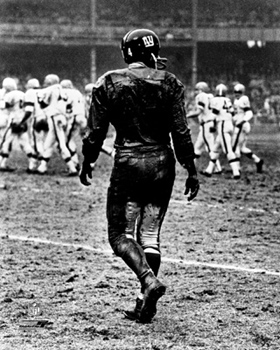
Relax. It’s not a religious reference, but rather homage to American Football. For those of you unaware of a Hail Mary Pass, it is an extremely long pass made in desperation that has only a fraction of a chance of success. The pass is usually thrown late in the game when a team offers its last stand in an attempt to win the match. Anyone who has ever seen the Hail Mary Pass thrown will be able to relate to the momentary trepidation that strangles the heart as you watch the spiraling ball in flight, carrying the hopes of the team and its fan base on its pigskin body, usually to no avail.

Yet when a Hail Mary finds its intended receiver the crowd erupts and the entire match spins on an axis and forces the opposition into a play to win situation they hadn’t been anticipating.

So why the football reference? I’m a writer. And let’s be honest, writers aren’t usually great sports people. Yet here I am trying to explain an infamous play in a sport that is foreign to my own country of origin. Well the reason is that right now I feel like I’m standing on my own ten yard line staring at an end zone blocked by my opponents, who will do anything to see me fail. But this isn’t an ordinary end zone. I’m not gunning for a game winning touchdown, I’m eyeing off a far larger dream. On the far side of the field located in front of the grandstands and marching band, is a publishing contract and a life changing moment of triumph.

Right now it’s time out and my opponents are milling around in a loose huddle counting down the minutes until they’ll form a line of scrimmage and attempt to rush me and strip my dreams from my fingers. I say minutes fairly loosely, because the reality of the situation is that my window of opportunity won’t actually appear until eight weeks from now when I touch down in New York City in preparation for my Hail Mary Pass.

Nevertheless I’m using the time afforded me right now to size up my opponents and assess the threats that they pose when they try to blindside me before I break into open ground and race to the end zone.

I can see that arsehole called Finance; the big line backer with the bull-neck and ham-sized fists that grunts as he stares at me. He knows that my money situation is fucked and I’m desperately trying to scrape together any kind of defence I can against the heavyset prick who will attempt to chop me down at the knees.

Beside him is Location; the bastard who has displaced my dreams many times before. He plays dirty and chooses favourites on the field. If he doesn’t like you then he’ll hit you hard at every opportunity; and so some reason the bastard seems to loathe me.

And so the list of my opponents goes on as I run my eyes over the huddle. The other writers are there, arsehole agents too. Fear is smiling and patting self-doubt on the back as they make eyes at me, formulating a plan to hit me simultaneously. But as I stare at the congregation of damned bodies watching me through their helmets and grills, there is only one man who I feel actually has the power to intercept my Hail Mary and destroy the opportunity I’ve worked so hard to create; and he looks a lot like me.

As an aspiring writer my greatest enemy is not the industry, my competitors, publishers, editors, agents, nor my displacement from the larger markets of America and Europe. My greatest enemy is myself, and it always will be. See I’m fairly confident in my abilities as a writer. I wouldn’t have won the competitions I have, or seen my work progress so far through screening processes if there wasn’t some level of skill in what I produce. But I also know that I am a bit of an extroverted introvert sometimes and I just hope and pray that when it comes time to throw that fucking pass and chase down my dreams that I have the balls to give it everything that I have.

It’s a confusing contradiction isn’t it? How can someone be an extroverted introvert? And how can they really hope to ever achieve anything if they can’t figure out something as simple as their own personality traits? Well, the thing is that I am incredibly introverted. I like my own company and tend to shy away from others. I don’t have an abundance of people who are close to me because I don’t want to. But for those that are, I aim to protect them with bloody hands if they ever need it. It’s not that I am necessarily shy though. I used to be. Now I’m the complete opposite. I’m confident as hell in myself and my abilities. But I don’t feel the need to take that confidence and turn it into arrogance by shouting it from the rooftops. I’m your quiet self-assured type that doesn’t feel the need to justify myself to anyone… And there in my own mind, lays my problem when I hit the streets of New York in eight weeks’ time.

I have to justify myself. I have to prove to publishers and agents and that I am worth their time and I have to stifle my own ego no matter how much it tells me to revert back the arrogant arsehole I can sometimes be.

So here I stand waiting for the moment when I’ll throw my Hail Mary Pass and try to score a book deal. The clock is winding down and the arseholes in their huddle before me are watching my every move. Finance is watching as I turn my small change into small fortunes. Location scrutinizes my movements as I book flights and accommodation. The other writers gawk at how I present myself and my scripts laden with ruin and woe. The agents watch as I prepare to slide into the chair opposite them and pitch my fucking heart out. And the man that looks like me stares back with an impassive curiosity, knowing that all of his teammates can be beaten and the only man who can defeat me is myself. He watches and waits, knowing that if I am to succeed I have to learn how to be humble and how to grovel. He watches with a sly smirk that says the game is mine to lose.

I may be a superstar in my own mind, but I still need to prove it to others. In eight weeks time when I throw my Hail Mary I need to do so with as much confidence and bravado as I can muster. But I must also do so with a sense of humility that can sometimes be foreign to me.

Dreams

“I have come to believe that coming true is not the only purpose of a dream. Its most important purpose is to get us in touch with where dreams come from, where passion comes from, where happiness comes from.”
– Lisa Bu